Sensors and measurements

The NanoSense EP5000 probe developed by Zaack, installed at eye level, will continuously measure (24 hours a day) from September to May the levels of CO₂, total VOCs, PM1, PM2.5, PM10, temperature (T) and relative humidity (RH) in the participating classrooms, thereby providing a real-time overview of the air quality in those classrooms. The data will be stored and available at any time, including via smartphone.
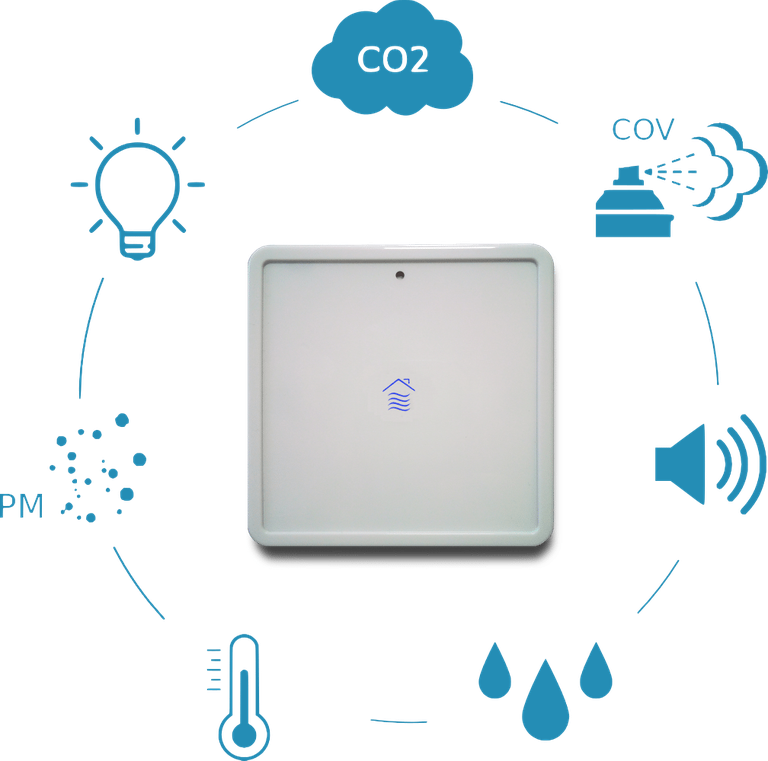
What are the pollutants that the sensor will detect, and under what conditions do they become a health concern?
CO₂ :
 it is always present in the atmosphere and we exhale it every time we breathe. Depending on its concentration in the air, it can cause a drop in concentration, headaches or nausea.
When we measure it, three levels are taken into account :
- Blue level (Excellent quality / Recommended) : this corresponds to less than 800 ppm,
- Orange level (Sufficient quality / Acceptable) : this corresponds to readings between 800 ppm and 1,500 ppm,
- Red level : above 1,500 ppm, airing or increased ventilation is required.
Unit of measurement (ppm): 1 ppm of a gas in the air is equal to 0.0001 per cent of the total volume of air.
VOCs :
 these are volatile organic compounds which may be man-made (acetone, methane) or produced by materials and cleaning products (alcohols, formaldehyde, terpenes, etc.).
Their impact on health depends on their nature, concentration and duration of exposure. In the short term, they can cause nausea, respiratory tract irritation, headaches, etc. In the long term, they can trigger allergies, cause cardiovascular disorders or chronic respiratory diseases, and in some cases even lead to cancer.
In the absence of a single binding European standard for indoor air quality, we have based our assessment on German standards :
- Good air quality : below 1,000 µg/m³
- Average air quality : between 1,000 µg/m³ and 3,000 µg/m³
- Poor air quality : above 3,000 µg/m³
VOC concentrations are expressed in micrograms per cubic metre (μg/m³).
PM10 :
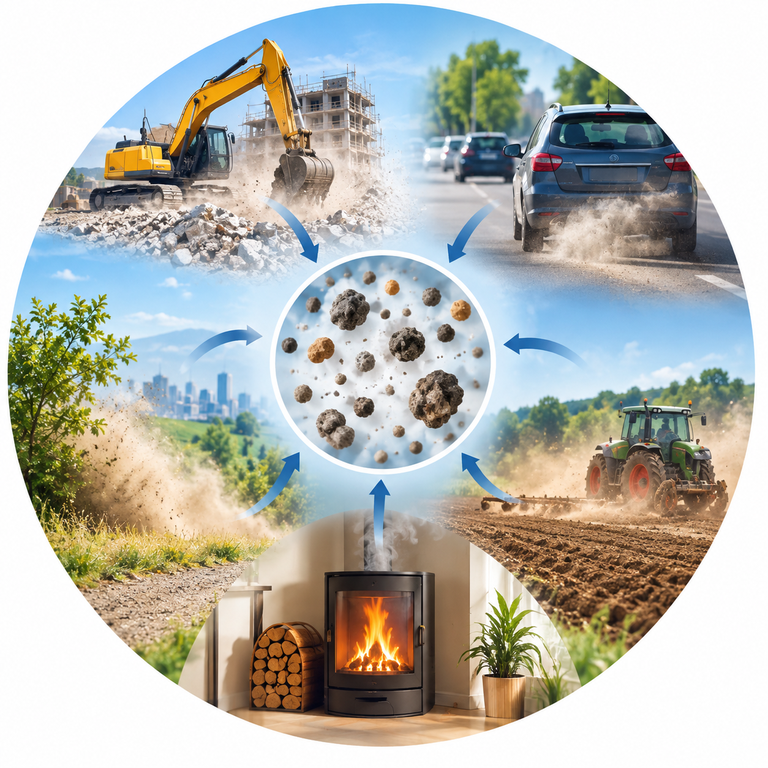 airborne particles with a diameter of 10 micrometres or less.
Due to their small size, these particles can be inhaled. They pass through the nose and throat to reach the bronchi. They can cause respiratory tract irritation and coughing, exacerbate asthma and increase the risk of cardiovascular disease.
- Good air quality : Below 15 μg/m³
- Moderate air quality : between 15 μg/m³ and 45 μg/m³
- Alert threshold : above 45 μg/m³
PM10 concentrations are expressed in micrograms per cubic metre (μg/m³) and we have based our figures on the WHO’s recommendations.
PM2.5 :
 fine particulate matter suspended in the air with a diameter of less than 2.5 micrometres.
Due to their smaller size, they pass through the bronchial barrier and reach the pulmonary alveoli. They can cause respiratory irritation, asthma and cardiovascular disease, and increase the risk of mortality in the long term.
- Good air quality : Below 5 μg/m³
- Average air quality : between 5 μg/m³ and 15 μg/m³
- Alert threshold : above 15 μg/m³
PM2.5 concentrations are expressed in micrograms per cubic metre (μg/m³) and we have based our figures on WHO recommendations.
PM1 (These will not be covered as part of our Win’Air Challenge but are among the parameters that can be analysed by the sensor) :
airborne particles with a diameter of 1 micrometre (1 µm) or less.
Given their extremely small size, PM1 particles bypass the natural defences of the nose and bronchi. They reach the pulmonary alveoli very easily. They can even cross the pulmonary barrier to enter the bloodstream directly and reach the organs. They contribute to cardiovascular disease, serious respiratory conditions and heart attacks.
- Good air quality : Below 5 μg/m³
- Average air quality : between 5 μg/m³ and 15 μg/m³
- Alert threshold : above 15 μg/m³
PM1 concentrations are expressed in micrograms per cubic metre (μg/m³) and we have based our figures on WHO recommendations.
 Air humidity
The ideal level is between 40 per cent and 60 per cent.
- above 60 per cent : This encourages the growth of mould, fungi and dust mites, which can cause respiratory problems, asthma or fatigue,
- below 40 per cent : Dry air irritates the eyes, throat and skin; it weakens the mucous membranes and thus increases the risk of viral infections.