
Article published by Materia Nova in the journal Chemosensors
A scientific article entitled “Green Synthesis of ZnO Nanoparticles Using Retama raetam Leaf Extract for VOC Sensing Applications” was published on 4 February by our partner Materia Nova (Driss Lahem) in the journal Chemosensors.
Abstract
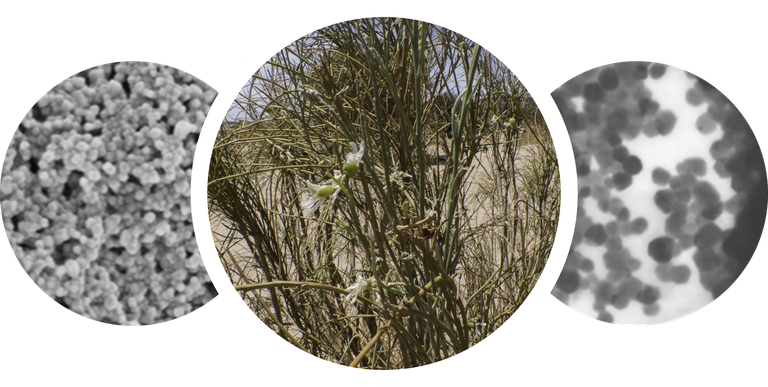
 The green synthesis of zinc oxide nanoparticles (ZnO NPs) using Retama raetam leaf extract via microwave irradiation was investigated. The biosynthesized NPs were characterized using scanning electron microscopy (SEM), energy dispersive X-ray spectroscopy (EDS), X-ray diffraction (XRD), Fourier transform infrared spectroscopy (FTIR), and UV-Vis spectrophotometry. An XRD pattern confirmed the formation of a hexagonal wurtzite structure. An FTIR analysis indicated the interactions of the NPs with bioactive molecules involved in their synthesis. SEM and STEM imaging determined the morphology of the NPs with an average size of 14 nm. Furthermore, the biosynthesized ZnO NPs were used as a sensitivelayer for detecting volatile organic compounds (VOCs) at low concentrations ranging from 0.5 to 5 ppm. The response sensor measured at an optimum operating temperature of 250 ◦C and 50% relative humidity (RH). The sensor exhibited a strong response to 5 ppm ethanol (325%), a detection limit as low as 4 ppb and an excellent stability across varying humidity levels.
Are you a scientist? 👉 I invite you to read the article: https://www.mdpi.com/2227-9040/14/2/42
If not, here is a brief summary of its content.
Zinc oxide (ZnO) was obtained from extracts of Retama raetam leaves using a ‘green’ method involving natural substances and a rapid microwave process. The resulting material was used to fabricate a sensor capable of detecting very small quantities of volatile organic compounds (VOCs), such as ethanol. The sensor operates optimally at 250 °C and remains stable despite fluctuations in humidity.
These results demonstrate its potential for the development of sensitive sensors for air quality monitoring.